Challenge with support
This collection uses Desirable Difficulty for the learning space in which a task stretches current ability while guidance or support makes progress possible. The connection to the zone of proximal development remains explicit.
Idea · A CLOSER LOOK
ABOUT THIS IDEA
Some conditions make practice harder while helping knowledge last: returning after a delay, retrieving without the answer in front of you, and mixing related problem types. Difficulty is desirable when it engages useful learning processes; confusion or overload is not automatically beneficial.
The Zone of Proximal Development is a related but different idea: the gap between what you can accomplish independently and what you can accomplish with guidance. It concerns supported development; desirable difficulty concerns conditions that improve learning. The linked explanation keeps that distinction visible.
A CLOSER LOOK
A challenge that serves learning—even when practice feels less fluent in the moment.
This collection uses Desirable Difficulty for the learning space in which a task stretches current ability while guidance or support makes progress possible. The connection to the zone of proximal development remains explicit.
ZPD concerns what a learner can do with assistance. Desirable difficulties in learning research concern conditions that can hinder immediate performance while strengthening later learning; the page keeps both concepts identifiable.
START HERE
Robert Bjork · Desirable Difficulties Perspective on Learning (opens in a new tab)Source for Desirable Difficulty: Robert Bjork · Desirable Difficulties Perspective on Learning.
Follow the original source to explore the work in its own context.
Introductions are grounded in the sources below. Collection notes and reading prompts provide an editorial starting point; personal opinions are identified in the collection’s content.
KEEP EXPLORING
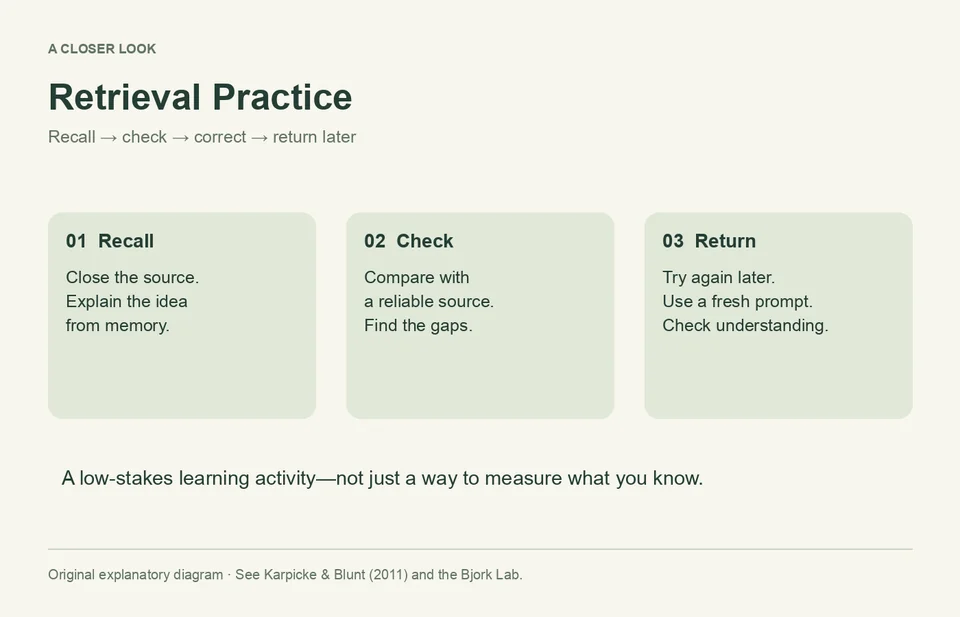 Idea
Retrieving before reviewing is one way to introduce a useful learning challenge.
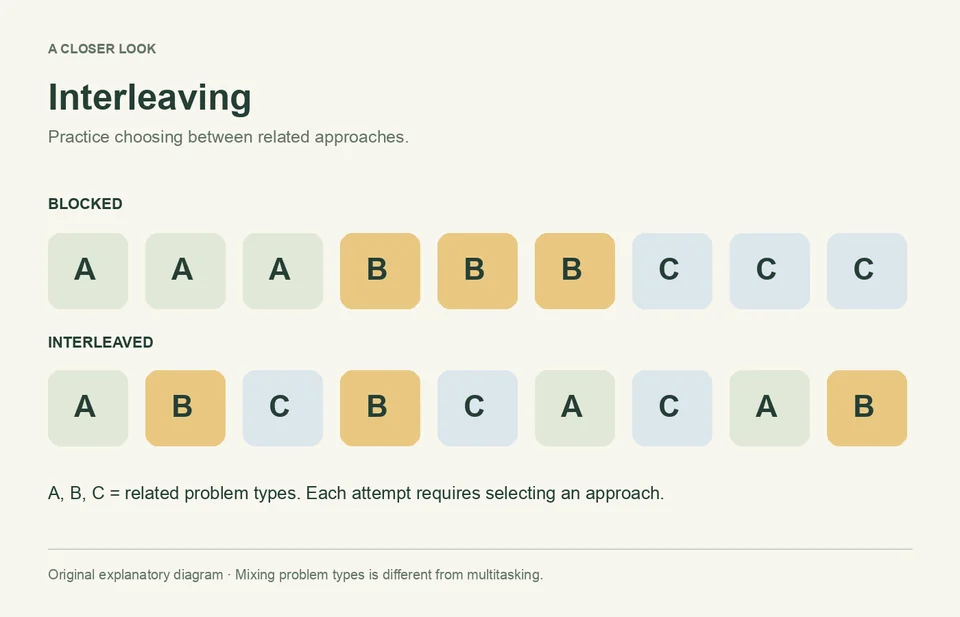 Idea
Mixing related problem types can require useful discrimination and method selection.
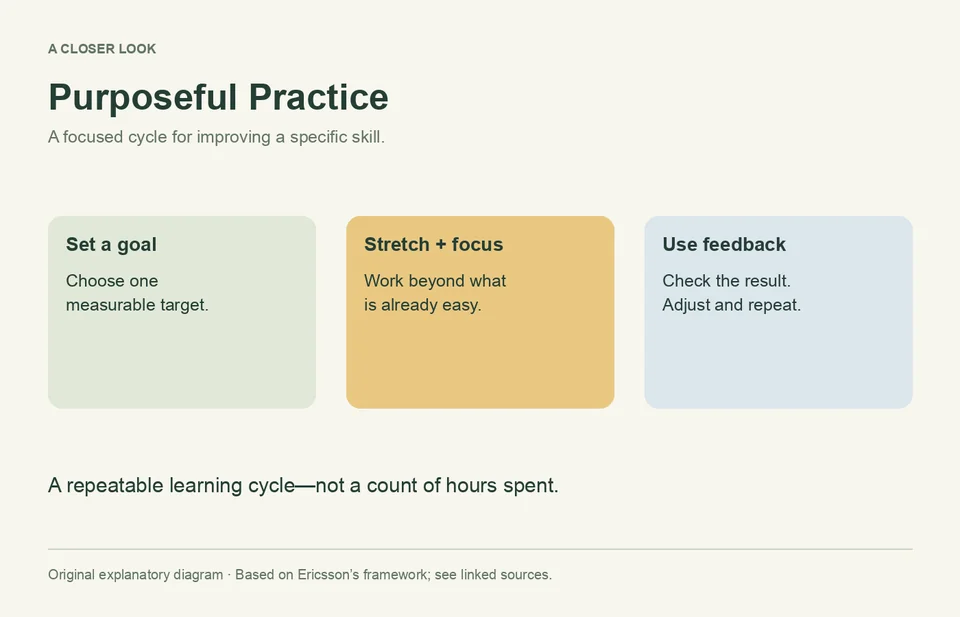 Idea
Both invite challenge in the service of improvement, while describing different frameworks.
 Book
Compare the benefit of some forms of stress with difficulty that supports learning; these are distinct claims with limits.