Recall is an activity
Trying to retrieve information from memory does more than reveal what is already known. Retrieval practice is studied as a learning activity in its own right.
Idea · A CLOSER LOOK
ABOUT THIS IDEA
Answer a question or explain an idea before looking at the source. A low-stakes quiz, a blank-page explanation, or a worked problem can all provide opportunities to retrieve.
In Karpicke and Blunt’s study, retrieval practice improved learning from science texts compared with elaborative concept mapping under the tested conditions. The practical invitation is to make recall part of study, alongside feedback and understanding.
A CLOSER LOOK
Bring an idea back from memory, check it, and strengthen what you can use later.
Trying to retrieve information from memory does more than reveal what is already known. Retrieval practice is studied as a learning activity in its own right.
Recognizing a passage while rereading and producing the idea without it are different tasks. That difference gives recall practice a distinct role in study.
START HERE
Karpicke & Blunt · original study (2011) (opens in a new tab)Source for Retrieval Practice: Karpicke & Blunt · original study (2011).
Follow the original source to explore the work in its own context.
Introductions are grounded in the sources below. Collection notes and reading prompts provide an editorial starting point; personal opinions are identified in the collection’s content.
KEEP EXPLORING
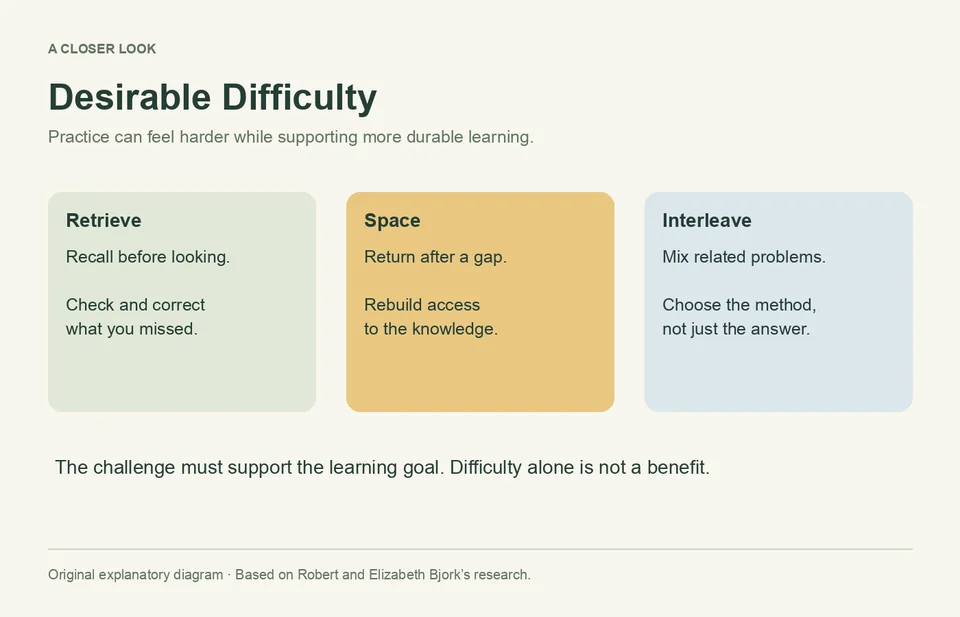 Idea
Retrieving before reviewing is one way to introduce a useful learning challenge.
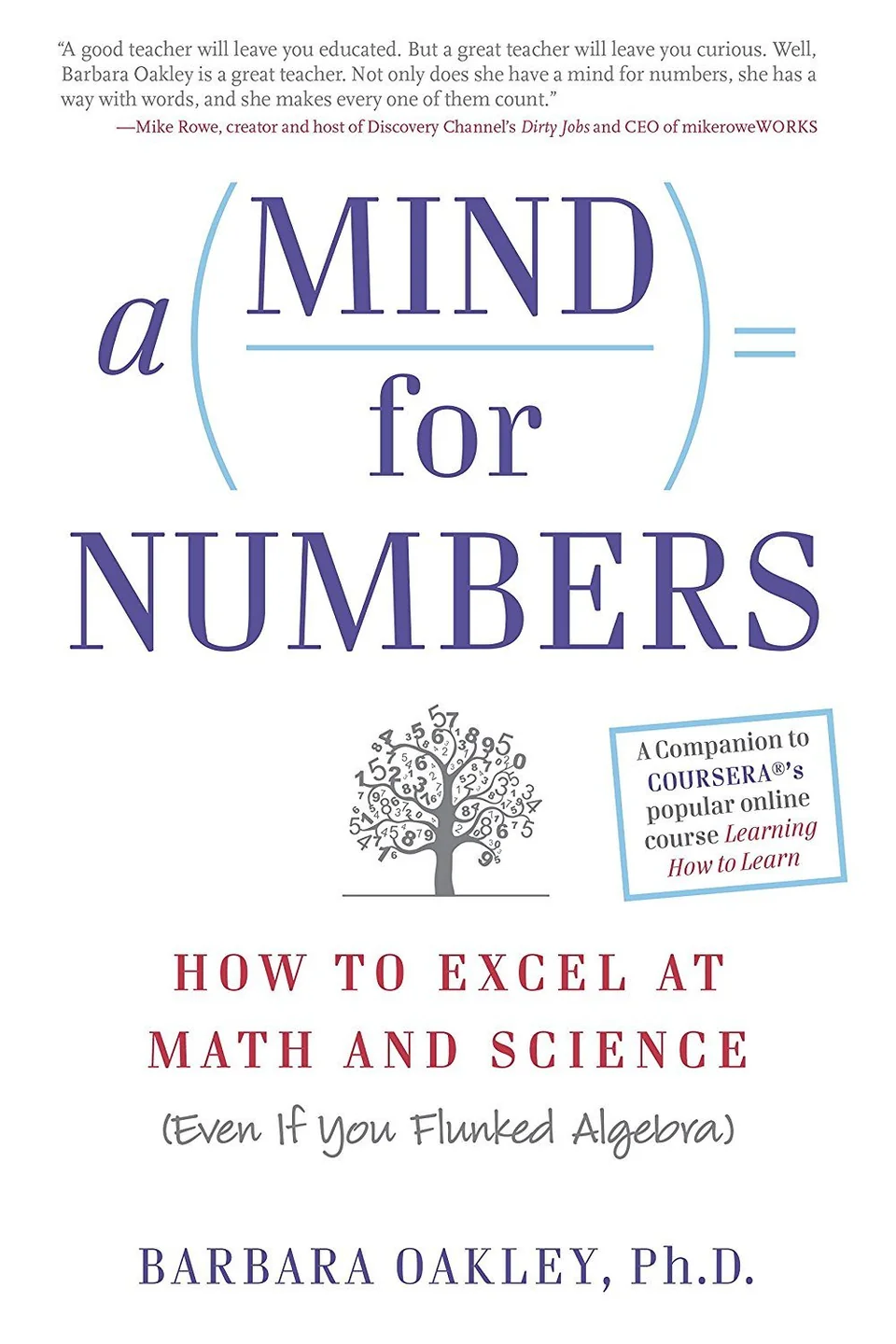 Book
Pair the learning book with a concrete exercise: recall an explanation before reopening the source.
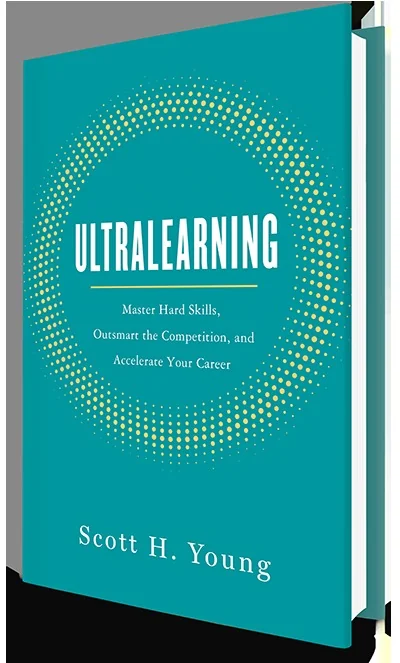 Book
Retrieval is one of Young’s learning principles and has a focused idea page here.