Four connected elements
Purposeful practice combines a specific goal, focused attention, feedback, and movement beyond a comfortable level of performance. Each element changes what happens during repetition.
Idea · A CLOSER LOOK
ABOUT THIS IDEA
Practice with specific goals, focused attention, feedback, and work beyond your current comfort zone. It can be purposeful without meeting the narrower requirements of deliberate practice.
Those features make practice purposeful; calling it deliberate requires the additional conditions described in Ericsson’s research.
A CLOSER LOOK
Practice with specific goals, focused attention, feedback, and work beyond your current comfort zone. It can be purposeful without meeting the narrower requirements of deliberate practice.
Purposeful practice combines a specific goal, focused attention, feedback, and movement beyond a comfortable level of performance. Each element changes what happens during repetition.
Feedback provides information that can alter the following attempt. A session becomes a sequence of adjustments toward a particular improvement.
START HERE
Ericsson & Harwell · research paper (opens in a new tab)Source for Purposeful practice: Ericsson & Harwell · research paper.
Follow the original source to explore the work in its own context.
Introductions are grounded in the sources below. Collection notes and reading prompts provide an editorial starting point; personal opinions are identified in the collection’s content.
KEEP EXPLORING
 Person
A related idea with a broader definition than deliberate practice.
 Book
Compare goals, feedback, and focused effort with deliberate practice.
 Book
Connect practical study habits with a specific learning goal and useful feedback.
 Idea
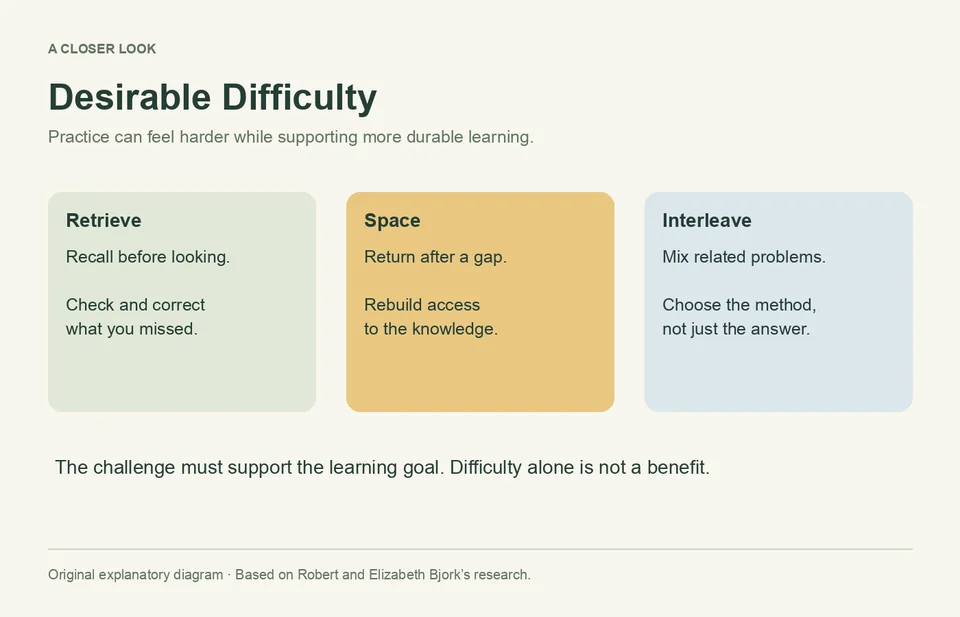
Both invite challenge in the service of improvement, while describing different frameworks.
 Book
Connect beliefs about developing ability with focused goals, feedback, and changes to practice.
 Idea
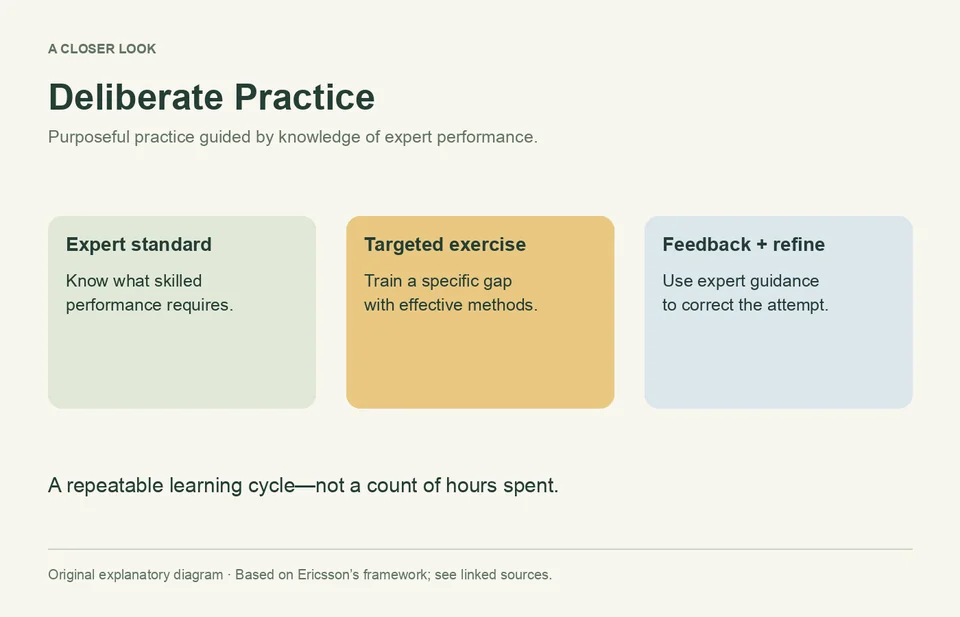
Another selected work from Anders Ericsson: In Ericsson's framework, deliberate practice is a specific form of purposeful practice, informed by established knowledge of expert performance and effective training methods, often with a qualified teacher.