Before the household woke
The family account describes Howe writing in the dim light, using a habit developed when she wrote at night without waking her children. The manuscript was the result of that remembered morning.
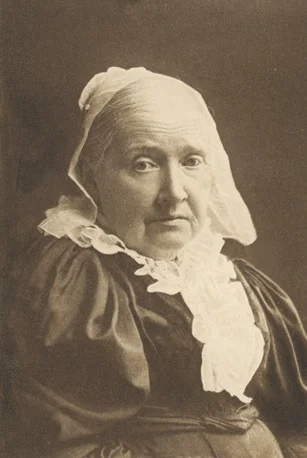
PEOPLE WORTH GETTING TO KNOW
Writer, abolitionist, and advocate for women’s rights
In November 1861, Julia Ward Howe returned from a troop review near Washington with companions who sang “John Brown’s Body.” James Freeman Clarke suggested that she write new words for the tune. Her family’s biography recounts what followed: before dawn, the verses came to her, and she rose to write them down before they vanished.
The words appeared in the February 1862 Atlantic. The hymn moved from a private act of writing into camps, churches, public meetings, and the voices of people who understood freedom as something worth a life.
A CLOSER LOOK
A tune heard among soldiers, words written before dawn, and a hymn that traveled far beyond its author.
The family account describes Howe writing in the dim light, using a habit developed when she wrote at night without waking her children. The manuscript was the result of that remembered morning.
More than a century later, Martin Luther King Jr. closed his Mountaintop speech with the hymn’s opening line. The song joins two moments already central to this collection.
A GOOD PLACE TO BEGIN
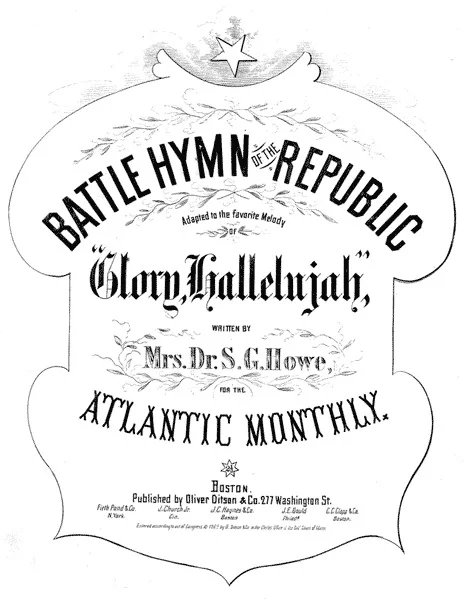
Words by Julia Ward Howe · published 1862
A marching tune becomes a vision of judgment, sacrifice, and freedom.
Explore this work →Introductions are grounded in the sources below. Collection notes and reading prompts provide an editorial starting point; personal opinions are identified in the collection’s content.
KEEP EXPLORING