A gift from people who had been enslaved
The origin of the fundraising matters to the purpose of the monument: people commemorated the freedom they had lived to experience.
Place · A CLOSER LOOK
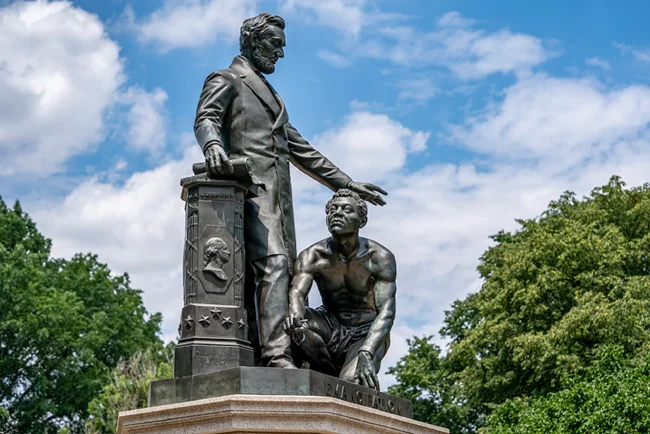
ABOUT THIS PLACE
The monument in Washington’s Lincoln Park was funded through contributions from formerly enslaved people. Charlotte Scott’s contribution helped begin the fundraising. Douglass delivered the dedication address on April 14, 1876.
This page leads into that address and the relationship behind it. The speech is the destination of the Lincoln–Douglass thread: a retrospective recognition of the man, his development, and what he accomplished.
A CLOSER LOOK
A commemoration of emancipation, and the occasion for Douglass’s tribute to Lincoln.
The origin of the fundraising matters to the purpose of the monument: people commemorated the freedom they had lived to experience.
Douglass’s words give the monument a place in this collection beyond the sculpture itself. They bring the relationship and its history into the act of remembrance.
A GOOD PLACE TO BEGIN
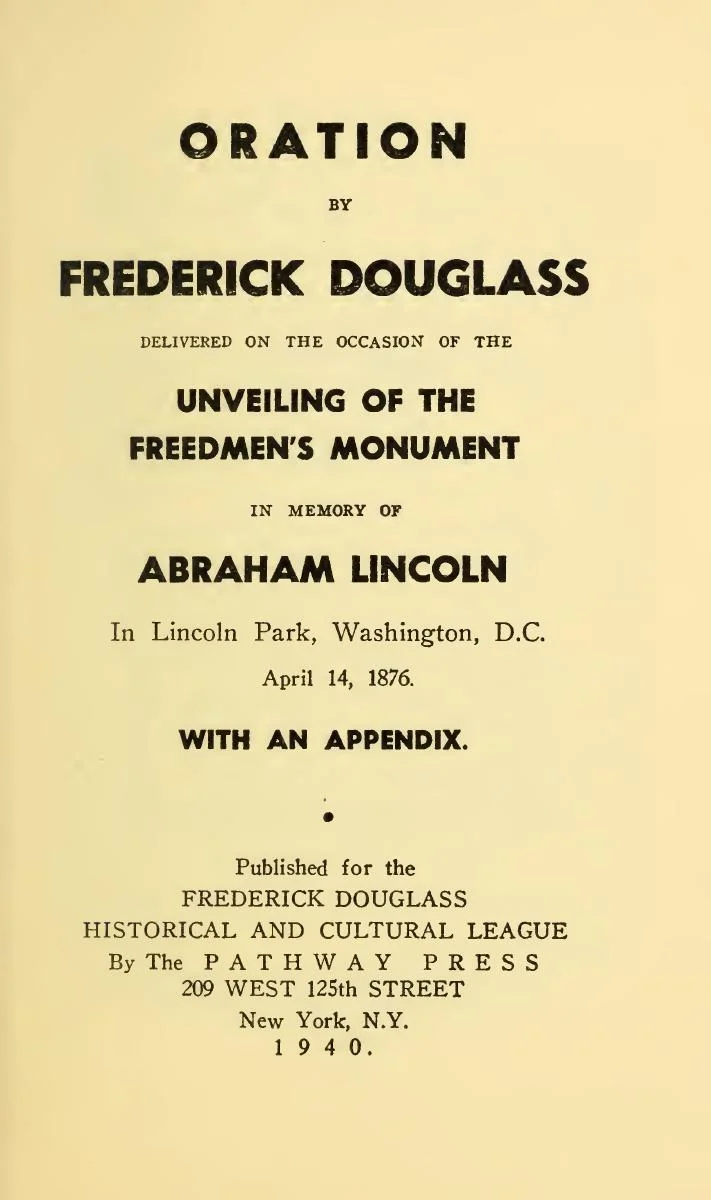
Frederick Douglass · April 14, 1876
A love letter to his friend: Douglass looks back on Lincoln and the distance they traveled.
Explore this work →Follow the original source to explore the work in its own context.
When I first heard of the monument, I was intrigued and wanted to see it. When I saw it, I was disappointed in the image. I think Lincoln would not have liked it. I connect that reaction to the Richmond encounter, when he told people not to bow to him. Douglass’s concern about the figure resonates with mine. But dwelling on that misses the point of why it was made and the relationship of Douglass and Lincoln.
The Richmond account and Douglass’s later letter about the monument provide context for this personal reaction. The dedication and the relationship remain the subject of this page.
Introductions are grounded in the sources below. Collection notes and reading prompts provide an editorial starting point; personal opinions are identified in the collection’s content.